Zobrazují se příspěvky se štítkemGermany(Bavaria). Zobrazit všechny příspěvky

pátek 12. července 2019

Germany(Bavaria) - Kulmbach

Coat of arms of Kulmbach
Kulmbach is the capital of the district of Kulmbach in Bavaria in Germany. The town is famous for Plassenburg Castle, which houses the largest tin soldier museum in the world, and for its famous sausages, or Bratwürste.
Kulmbach is located in the middle of the Bavarian province of Upper Franconia, about 25 kilometres (15.5 miles) northwest of the city of Bayreuth. To the south of Kulmbach, the River Main begins at the confluence of its headstreams, the White Main and Red Main.
Kosermuhle in Kulbach.

středa 22. května 2019

Germany(Bavaria) - Landshut

Coat of arms of Landshut
Landshut is a town in Bavaria in the south-east of Germany. Situated on the banks of the River Isar, Landshut is the capital of Lower Bavaria, one of the seven administrative regions of the Free State of Bavaria.Landshut is the largest city in Lower Bavaria, followed by Passau and Straubing, and Eastern Bavaria's second biggest city.
The Church of St. Martin in Landshut is a medieval church in the German city located in the state of Bavaria. St. Martin's Church, along with Trausnitz Castle and the celebration of the Landshuter Hochzeit (wedding), are the most important landmarks and historical events of Landshut. This Brick Gothic landmark is the tallest church in Bavaria, and the tallest brick building as well as church in the world. It is also the 2nd tallest brick structure in the world (after Anaconda Smelter Stack), made without steel supports. St. Martin's church has a height of 130.6 metres (428 ft).
In the year 1204, the town of Landshut was founded by Duke Louis I, Duke of Bavaria the Kelheimer. He established Castle Trausnitz and built a small church on the site of the present-day St. Martin's Church. That structure was superseded by building the existing church, which began in 1389.1 It took about 110 years to finish the church. During this period, five architects managed the building site. It took 55 years just to build the tower. The church was finally dedicated in 1500

sobota 19. května 2018

Germany(Bavaria) - Schwangau

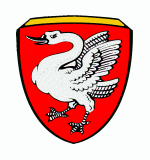
Coat of arms of Schwangau
Schwangau is a municipality in the district of Ostallgäu in BavariaGermany. The village lies 4 km from the larger town of Füssen and just 1.5 km from Hohenschwangau, a collection of tourist-oriented facilities adjacent to the major tourist attractions of Schloss Neuschwanstein and Schloss Hohenschwangau.
Neuschwanstein Castle is a 19th-century Romanesque Revival palace on a rugged hill above the village of Hohenschwangau near Füssen in southwest BavariaGermany. The palace was commissioned by Ludwig II of Bavaria as a retreat and in honour of Richard Wagner. Ludwig paid for the palace out of his personal fortune and by means of extensive borrowing, rather than Bavarian public funds.
Architectural styleRomanesque Revival
LocationHohenschwangau, Germany
Construction started5 September 1869
Completedc. 1886 (opened)
OwnerBavarian Palace Department
Design and construction
ArchitectEduard Riedel
Civil engineerEduard Riedel, Georg von DollmannJulius Hofmann
Other designersLudwig IIChristian Jank

pondělí 17. října 2016

Germany(Bavaria) - Passau

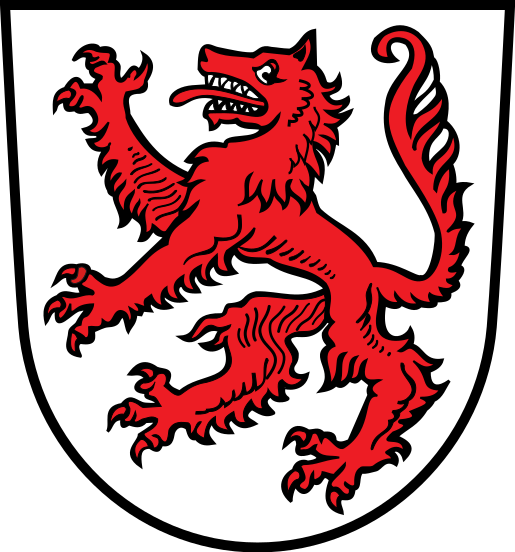
Coat of arms of Passau
Passau is a town in Lower Bavaria, Germany. It is also known as the Dreiflüssestadt or "City of Three Rivers," because the Danube is joined at Passau by the Inn from the south and theIlz from the north. 
Old town Passau..

pondělí 21. září 2015

Germany(Bavaria) - Ingolstadt

Coat of arms of Ingolstadt
Ingolstadt is a city in the Free State of Bavaria, in the Federal Republic of Germany. It is located along the banks of the River Danube, in the centre of Bavaria.
View from Ingolstadt.

pondělí 20. července 2015

Germany(Bavaria) - Neuburg an der Donau

Wappen der Stadt Neuburg a.d. Donau
Neuburg an der Donau, literally Newcastle on the river Danube, is a town which is the capital of the Neuburg-Schrobenhausen district in the state of Bavaria in Germany
The Neuburg Castle is a palace in Neuburg an der DonauUpper BavariaThe original castle was built in the early Middle Ages by the Agilolfings. This was acquired by the Wittelsbach dukes in 1247.
Today the castle houses a gallery of baroque paintings, the museum is under supervision of the Bavarian State Picture Collection.

pondělí 20. října 2014

Germany(Bavaria) - Immenstadt

Immenstadt im Allgäu is a town in the Upper Allgäu, the southernmost district of BavariaGermany, in the German Alps. First mentioned in a 1275 administrative tract, it was granted town privileges in 1360, which makes it one of the oldest towns in the area. It was the seat of the counts of Königsegg-Rothenfels until 1804.
Boathouses on the Grosser Alpsee near Immenstadt in Allgäu.


středa 30. července 2014

Germany(Bavarie) - Nürnberg

Nuremberg  is a city in the German state of Bavaria, in the administrative region ofMiddle Franconia. Situated on the Pegnitz river and the Rhine–Main–Danube Canal, it is located about 170 kilometres (110 mi) north of Munich. It is the second-largest city in Bavaria (after Munich), and is the largest in Franconia.

Hospice of the Holy Spirit 


View from Nürnberg. 

Windows in Nürnberg.


Germany(Bavaria) - Munich

Munich  is the capital and largest city of the German state of Bavaria. It is located on the River Isar north of the Bavarian Alps. Munich is the third largest city in Germany. Munich lies on the elevated plains of Upper Bavaria, about 50 km (31.07 mi) north of the northern edge of the Alps, at an altitude of about 520 m (1,706.04 ft) ASL. The local rivers are the Isar and the Würm. Munich is situated in the Northern Alpine Foreland. The northern part of this sandy plateau includes a highly fertile flint area which is no longer affected by the folding processes found in the Alps, while the southern part is covered with morainic hills. Between these are fields of fluvio-glacial out-wash, such as around Munich. Wherever these deposits get thinner, the ground water can permeate the gravel surface and flood the area, leading to marshes as in the north of Munich.
Views from Munich.


Octoberfest, Munich. 


Pasing is located west of the Munich city centre, at the north-western edge of the city's innermost traffic zone.


The Pied Piper of Hamelin, also known as Sweet Sarah of Batavia (GermanRattenfänger von Hameln, the Rat-Catcher of Hamelin) is the subject of a legend concerning the departure or death of a great number of children from the town of Hamelin (Hameln), Lower Saxony, Germany, in the Middle Ages. The earliest references describe a piper, dressed in multicolored ("pied") clothing, leading the children away from the town never to return. In the 16th century the story was expanded into a full narrative, in which the piper is a rat-catcher hired by the town to lure rats away with his magic pipe 


The Siegestor (en: Victory Gate) in Munich, is a three-arched triumphal arch crowned with a statue of Bavaria with a lion-quadrigaThe Siegestor is 21 meters high, 24 m wide, and 12 m deep. It is located between the Ludwig Maximilian University and the Ohmstraße, where the Ludwigstraße (south) ends and the Leopoldstraße (north) begins. It thus sits at the boundary between the two Munich districts of Maxvorstadt and Schwabing
The gate was commissioned by King Ludwig I of Bavaria, designed by Friedrich von Gärtner and completed by Eduard Mezger in 1852. The marble quadriga was sculpted by Johann Martin von Wagner, artistic advisor to Ludwig and a professor at the University of Würzburg. Lions were likely used in the quadriga, instead of the more usual horses, because the lion was a heraldic charge of the House of Wittelsbach, the ruling family of the Bavarian monarchy.


The Allianz Arenais a football stadium in MunichBavariaGermany with a 75,024 seating capacity.  Widely known for its exterior of inflatedETFE plastic panels, it is the first stadium in the world with a full color-changing color exterior.
Broke ground21 October 2002
Opened30 May 2005
Construction cost€340 million
ArchitectHerzog & de Meuron
ArupSport
Structural engineerOve Arup & Partners


úterý 29. července 2014

Germany(Bavaria) - Kempten

Kempten is the largest town in Allgäu, a region in the south-west of BavariaGermany. The area was possibly settled originally by Celts, but was later overtaken by the Romans, who called the town Cambodunum. Kempten is the oldest urban settlement (town) in Germany.
Greetings from Kempten.


Germany(Bavaria) - Fürstenstein

Fürstenstein is a municipality in the district of Passau in Bavaria in Germany.
Greetings from Fürstenstein.