Zobrazují se příspěvky se štítkemPortugal. Zobrazit všechny příspěvky

úterý 6. března 2018

Portugal - Felgueiras

Felgueiras Coat of Arms
Felgueiras is a Portuguese city in the District of Porto , northern region and Tâmega sub-region , located in the parish of Margaride, Várzea, Lagares, Varziela and Moure . The municipality is limited to the northern city of Fafe , northeast of Celorico de Basto , southeast of Amarante , southwest byLousada and to the northwest by Vizela and Guimarães .
Church of Saint Mammes of Vila Verde
The most ancient documents refer the existence of a Church of Saint Mammes in 1220, then integrated in the patronage of the Monastery of Saint Mary of Pombeiro.
However, the current building corresponds to a later reform, already in mid Gothic period, although it still resorts to the Romanesque construction.
The "Inquirições" [administrative enquiries] of 1258 indicate that D. Mendo de Sousa settled in the place of Vila Verde in 1258. The chapel would, most probably, be erected in the 13th century.
Martim Anes and his sister, Maria Anes, donated the Quintã of Vila Verde to the Monastery of Pombeiro, on the 20th February 1301.
Some details of the frescoes that we may admire today in the chancel were painted by Master Arnaus, in the 16th century. The tiling and plastering decorated with painting is still visible in the nave. The patron saint was Saint Mammes.

For a long time in ruins, without any roofing, the Church has suffered the effects of weather and neglect.  This neglect would have begun after 1866, when a new parish Church was built in Vila Verde. In 1959 it had already lost its roof.

středa 21. prosince 2016

Portugal - Torres Novas

Bandeira de Torres Novas
Torres Novas is a Portuguese municipality in the district of Santarém, in the Médio Tejo of the Centro region.
The Torres New Castle is located in the parish of Santa Maria , the municipality of Torres Novas , in the district of Santarém in Portugal . 
The early human occupation of New Towers site is the object of controversy, being attributed by some authors traditionally the Greeks (named Neupergama or Kaispergama ) and the Romans (named New Augusta ).Still others attribute the foundation of the village the Celts in 308 BC .

Judging by the traces archaeological of the Roman presence in the region, it would be plausible to assume a military occupation of the hill, controlling the route that connected Conímbriga the Olisipo ( Lisbon ). More recently here were placed uncovered the ruins of a Roman settlement, the Cardilium Vila .

pondělí 29. června 2015

Portugal - Évora

Coat of arms of Évora
Évora  is a city and a municipality in PortugalÉvora (altitude 300 m) is situated in Alentejo, a large region of wide plains on the south of Portugal, borderd on the North by the Tagus River and on the South by the region of Algarve.
The Igreja de São Francisco (Church of St. Francis) is located in Évora, Portugal. It is best known for its lugubrious Chapel of the Bones.
This huge church was built in Gothic style (with some Manueline influences) between 1475 and the 1550s to the design of Martim Lourenço, replacing an earlierRomanesque church of 1226. This church is one of a kind through its narthex with arcades in front of the church. The arcade is formed by seven arches with different forms (semicircular, pointed or horseshoe arches), a typical blend of Gothic and Moorish elements.


pondělí 20. dubna 2015

Portugal - Porto

Porto also known as Oporto in English, is the second-largest city in Portugal, after Lisbon, and one of the major urban areas inSouthwestern EuropeLocated along the Douro river estuary in Northern Portugal, Porto is one of the oldest European centres, and its historical core was proclaimed a World Heritage Site by UNESCO in 1996. The western part of its urban area extends to the coastline of the Atlantic Ocean. Its settlement dates back many centuries, when it was an outpost of the Roman Empire.
Rabelo Boat and Ribeira, Porto. UNESCO


středa 3. září 2014

Portugal - Funchal

Funchal is the largest city, the municipal seat and the capital of Portugal's Autonomous Region of MadeiraFunchal is located inside a natural amphitheater-shaped valley, with gentle slopes beginning at the coast which rise to 1200 meters, that provided a natural shelter for early settlers.
View on Funchal.


úterý 5. srpna 2014

Portugal - Silves

Silves is a municipality in the Portuguese Algarve of southern PortugalThe municipality is crossed by the Arade River, which was navigable in historical times and was key to the prosperity of the city of Silves. The waters of the river form thedams of Arade and Funcho. The landscape of the municipality is generally hilly. To the south the municipality borders the Atlantic Ocean.
View on Silves.


Portugal - Lousã

Lousã is a municipality in the district of Coimbra, in the central part of PortugalLocated in the central part of Portugal, the municipality of Lousa, is part of the old district of Coimbra, in the subregion of Pinhal Interior Norte, and limited in the north by Vila Nova de Poiares, in the east by Góis and Miranda do Corvo, and in the south by Castanheira de Pêra and Figueiró dos Vinhos, making part of the district of Leiria.
Stone house in Vila de Lousa.


Portugal - Lisbon

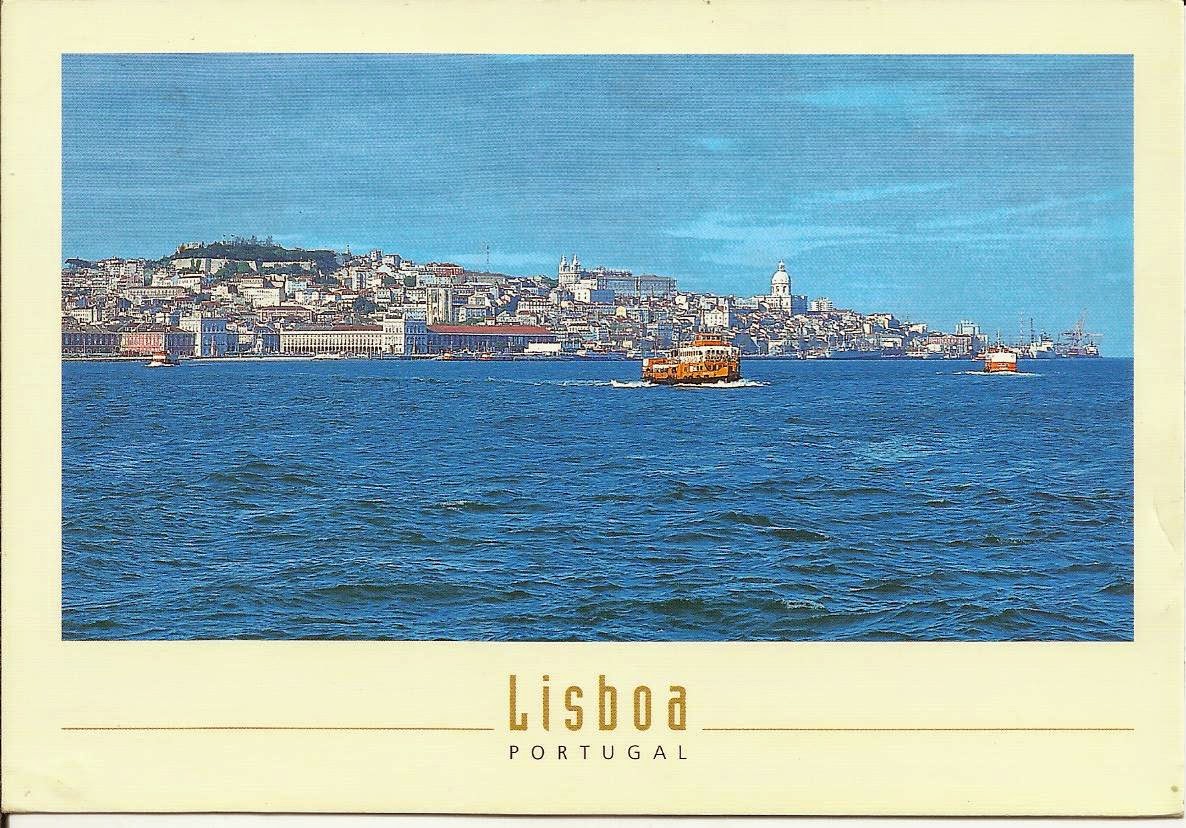
Lisbon is the capital and the largest city of PortugalLisbon situated at the mouth of the Tagus River and is the westernmost capital of a mainland European country. The westernmost part of Lisbon is occupied by the Parque Florestal de Monsanto (English: Monsanto Forest Park), an 10 km2 (4 sq mi) urban park, one the largest in Europe, and occupying ten percent of the municipality. 
Electric transportation in Lisbon.


The Rua Augusta Arch is a stone, triumphal arch-like, historical building and visitor attraction in LisbonPortugal, on Commerce Square, built to commemorate the city's reconstruction after the 1755 earthquake. It has six columns (some 11 m high) and is adorned with statues of various historical figures. Significant height from the arch crown to the cornice imparts an appearance of heaviness to the structure. The associated space is filled with the coat of arms of Portugal. The allegorical group at the top, made by French sculptor Célestin Anatole Calmels, represents Glory rewarding Valor and Genius. 


View from Lisbon.


View from Lisbon.


The Rua Augusta Arch is a stone, triumphal arch-like, historical building and visitor attraction in LisbonPortugal, on Commerce Square, built to commemorate the city's reconstruction after the 1755 earthquake. It has six columns (some 11 m high) and is adorned with statues of various historical figures. Significant height from the arch crown to the cornice imparts an appearance of heaviness to the structure. The associated space is filled with the coat of arms of Portugal. The allegorical group at the top, made by French sculptor Célestin Anatole Calmels, represents Glory rewarding Valor and Genius. 


Estádio José Alvalade is a football stadium in Lisbon, Portugal, home of Sporting Clube de Portugal, one of the country's biggest clubs. Having replaced the formerEstádio José Alvalade (1956).
Broke ground2003
Opened6 August 2003
Construction cost€121 million
ArchitectBallast Nedam


Portugal - Fátima

Fátima is a civil parish in the municipality of Ourém, in the Portuguese Centro RegionFátima is located on the Estremenho Limestone Massif, on the flanks of the Serra de Aire, approximately 300 metres (980 ft) above sea level. The geology of the Serras de Aire and Candeeiros gives rise to an arid landscape with a rocky ground interspersed with limestone outcroppings. There are various geological formations in the region including sinkholes, uvalas and polje (like the Polje de Minde-Mata), as well as karst grottoes, caves with stalactites and stalagmites, in addition to lapiez fields
The Sanctuary of Fátima (PortugueseSantuário de Fátima), which is also referred to (incorrectly) as the Basilica of Our Lady of Fátima(PortugueseBasilica de Nossa Senhora de Fátima), is a group of Roman Catholic buildings and structures in the (civil parish) of Fátima, in the municipality of Ourém in Portugal.

ArchitectsGerard van Kriken, António Lino,J. Carlos Loureiro,Orlando Sá Nogueira,Zulmiro de Carvalho,Rufatti brothers (Padua)
StyleNeobaroque
MaterialsStone, Marble, Bronze, Wood,Stained glass, Ceramic tile
Origin1916
 - Initiated13 May 1928
 - Completion1954
ConsecrationOctober 1953
OwnerPortuguese Republic

Portugal - Coimbra

Coimbra is a city in the municipality of Coimbra in PortugalThe historic city of Coimbra is located in central Portugal, 120 kilometres (75 miles) south of Porto, 195 km north of Lisbon. One of Portugal's biggest crossroads, Coimbra is served by the A1, the main highway of Portugal. It is set by the Mondego River, about 40 km (25 mi) east of Figueira da Foz, a neighbour coastal city with several beaches, summer and seaport facilities on the coast of the Atlantic Ocean. Just outside the municipality, there are also several picturesque mountain towns such as Lousã and Penacova and spa towns and villages such as LusoBuçaco and Curia.
The Santa Cruz Monastery, (English: Monastery of the Holy Cross, Portuguese: Mosteiro de Santa Cruz), best known as Igreja (Church) de Santa Cruz is a National Monument in Coimbra, Portugal. Because the first two kings of Portugal are buried in the church it was granted the status of National Pantheon. Founded in 1131 outside the protecting walls of Coimbra, the Santa Cruz Monastery was the most important monastic house during the early days of the Portuguese monarchy. St. Theotonius founded this community of canons regular and served as their first prior. The monastery and church were erected between 1132 and 1223.